
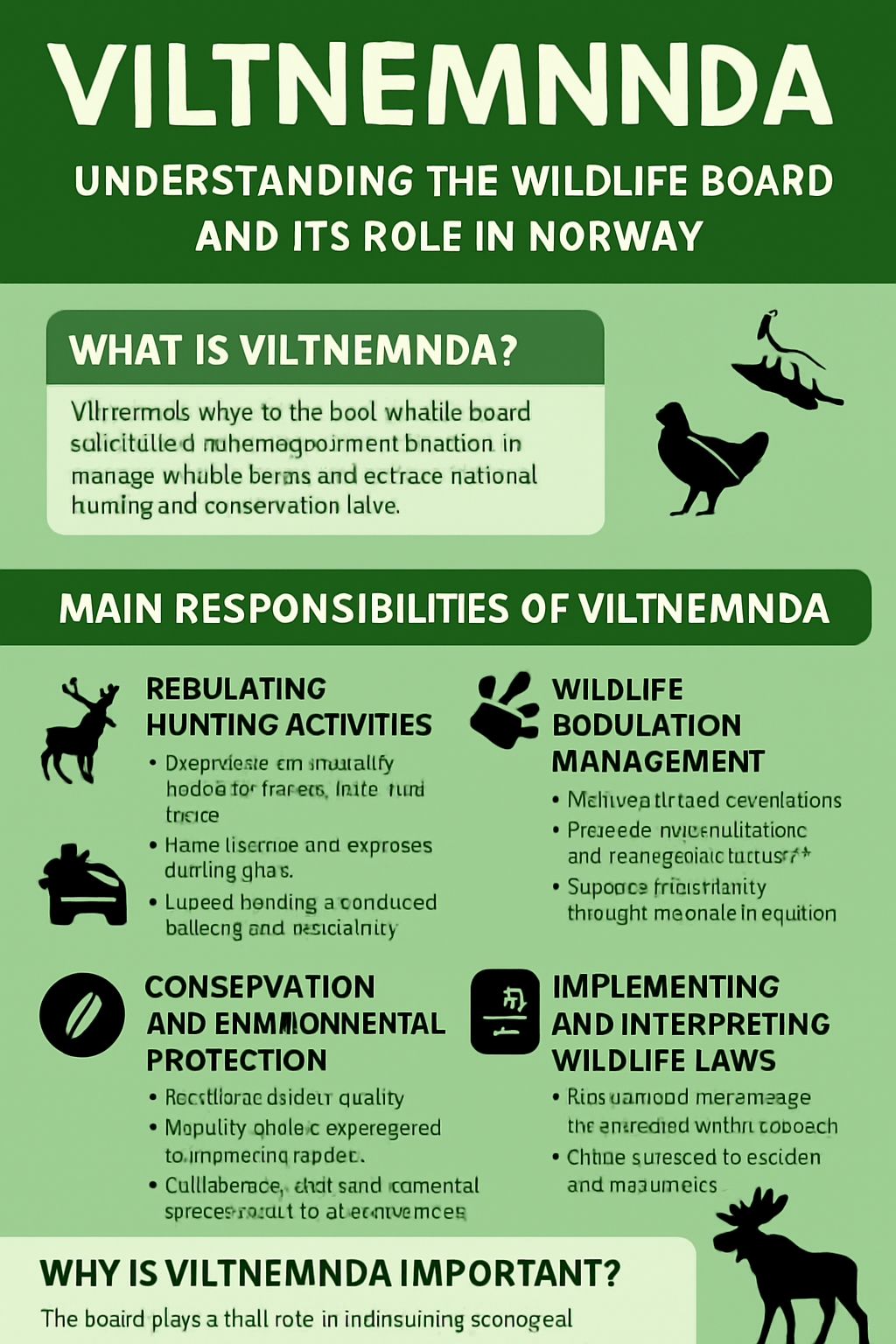
Norway is known for its rich wildlife, vast forest areas, and strong culture of outdoor activities. To maintain the balance between nature conservation, hunting regulations, and public safety, the country relies on a governing body known as the Viltnemnda. While many people are familiar with hunting laws, fewer know how central the Viltnemnda is to wildlife management at the municipal level.
This article explains what Viltnemnda is, how it works, responsibilities, authority, and why it plays a key role in sustainable wildlife management in Norway.
What Is Viltnemnda?
Viltnemnda refers to the local wildlife board established in Norwegian municipalities to manage wildlife issues and enforce national hunting and conservation laws. The board typically consists of appointed members with relevant experience in wildlife management, hunting, environmental policy, and public administration.
Their main goal is to ensure a balance between human needs and the protection of natural ecosystems, with decisions based on science, sustainability, and public welfare.
Main Responsibilities of Viltnemnda
Viltnemnda oversees several important wildlife-related duties, including:
🦌 1. Regulating Hunting Activities
-
Determines local hunting quotas for moose, deer, and other game
-
Issues licenses and approves hunting plans
-
Ensures hunting is conducted ethically and sustainably
🐾 2. Wildlife Population Management
-
Monitors animal populations
-
Prevents overpopulation and ecological imbalance
-
Supports biodiversity through responsible regulation
🚗 3. Handling Wildlife Accidents
Wildlife–vehicle collisions are common in rural Norway. Viltnemnda is responsible for:
-
Coordinating wildlife rescue or removal
-
Ensuring the situation is handled safely for motorists and animals
-
Reporting incidents to relevant authorities
🌿 4. Conservation and Environmental Protection
-
Maintains habitat quality
-
Works to protect endangered or vulnerable species
-
Collaborates with environmental agencies and local communities
📜 5. Implementing and Interpreting Wildlife Laws
The board ensures local compliance with national wildlife legislation, offering guidance to hunters and landowners.
How Are Members Chosen?
Each municipality appoints members for Viltnemnda, generally for a set political period. Members often include:
-
Experienced hunters
-
Biologists or wildlife specialists
-
Local community representatives
-
Environmental advisors
Their combined knowledge helps maintain a fair and well-regulated wildlife management system.
Interaction with the Public
Viltnemnda frequently interacts with residents, especially during hunting seasons or wildlife incidents. Citizens may contact the board for:
-
Reporting injured or dangerous wildlife
-
Obtaining hunting permissions
-
Information on local hunting times and rules
-
Advice on wildlife on private property
Their accessibility builds trust between local authorities and the community.
Why Is Viltnemnda Important?
The board plays a vital role in maintaining ecological stability. Without management, certain species may become overpopulated, leading to:
-
Increased animal–vehicle collisions
-
Crop and forest damage
-
Disease spread within wildlife
By keeping populations under control, Viltnemnda protects both nature and society while preserving Norway’s outdoor traditions.
Challenges Faced by Viltnemnda
Despite its effectiveness, the board faces ongoing challenges:
| Challenge | Impact |
|---|---|
| Climate change | Alters migration patterns and food availability |
| Urban expansion | Reduces habitat space |
| Conflicts with landowners | Requires fair negotiation |
| Growing wildlife population | Increases responsibility and workload |
Effective long-term strategies and community cooperation are essential to overcoming these challenges.
Conclusion
Viltnemnda is a cornerstone of wildlife management in Norway, balancing conservation, public safety, and hunting traditions. By monitoring populations, responding to wildlife incidents, and enforcing regulations, the board ensures that nature is respected and preserved for future generations.
As society continues to grow and interact with natural environments, the role of Viltnemnda becomes increasingly important — standing as a link between people, animals, and the ecosystem that connects them.